
Materials Guide
Why Tongue-and-Groove Ceilings?
A T&G ceiling isn't the default finish for a lanai or porch by accident. It's a natural material, it reads as a finished space instead of an unfinished frame, and the joint itself is doing real weather protection — not just looking good overhead.
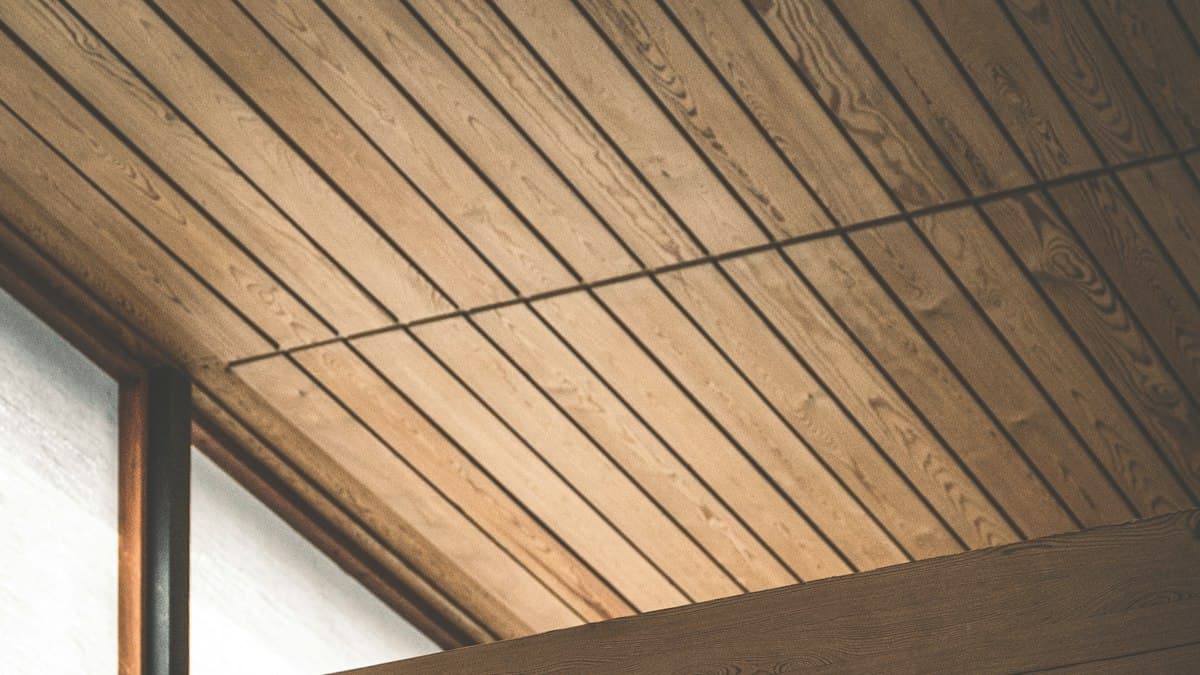
The Joint Is the Point
A tongue-and-groove board interlocks with the next one along its full length, and that joint sheds water outward along the board instead of letting it collect or wick into a seam the way a flat, edge-butted panel can. On an open, unconditioned porch or lanai ceiling exposed to wind-driven rain from underneath as well as above, that detail is the difference between a ceiling plane that stays tight for years and one that starts showing water staining at the seams after the first hard season. The look is the reason most homeowners ask for it. The joint is why we recommend it.
Wood, Aluminum Composite, or PVC
Real wood is the only option that gives you actual grain, knots, and warmth instead of a printed or molded imitation of it. We install pre-finished wood T&G lines like Synergy Wood® — Southern Pine, Bald Cypress, or Red Grandis, including their E-Peck® Rustic Barnwood and Haven V-Joint profiles — which ship end-matched and pre-finished, cutting on-site finishing labor considerably. We also install standard cypress and pine for a more traditional, site-finished look. Either way it’s still real wood: expect to refinish or reseal it every three to five years depending on sun and rain exposure, and expect the color to weather and shift between refinishing cycles if you leave it unmaintained.
Aluminum composite plank — systems like Longboard’s extruded aluminum T&G soffit line — carries a baked-on wood-grain finish over an aluminum core, so it can be color-matched to structural aluminum trim and won’t expand or contract meaningfully with Florida’s temperature and humidity swings. PVC plank — the profile category Versatex’s T&G board line is a common example of — is solid cellular PVC, completely inert to moisture and insects, lighter to handle during install, and never needs painting, though its color is molded through the material rather than matched to a specific trim finish. Both trade a small amount of the real-wood look for a ceiling that, once installed, is essentially wash-only for its service life.
Maintaining a Wood Ceiling on the Gulf Coast
Humidity is the variable that actually damages a wood T&G ceiling, not sun exposure alone. Wood swells as it absorbs moisture and shrinks as it dries, and boards that don’t have room to move through that cycle are what eventually cup, split, or work their fasteners loose. That’s why we detail expansion gaps into the install and why finish choice matters as much as species: an oil finish lets the wood breathe through humidity swings, while a film-forming polyurethane can trap moisture underneath it if water ever gets behind the finish at a seam or an exposed cut end. Whatever the finish, plan on checking it periodically for graying, cracking, or a finish that’s gone dry and chalky — that’s your signal it’s due for another coat, not a sign something has gone structurally wrong.
Sourcing It Responsibly
If the natural-material appeal of wood matters to you, sourcing matters too. Southern Pine, Bald Cypress, and Red Grandis — the species we install through Synergy Wood’s pre-finished lines, as well as standard cypress and pine — are all fast-growing, widely farmed species rather than slow-growing old-growth timber, which is a meaningfully different sourcing story on its own. If chain-of-custody traceability matters to you specifically, ask your supplier for Forest Stewardship Council (FSC) chain-of-custody certification, which governs legal harvesting, forest regeneration, and traceability back to a certified source — it isn’t automatic on every board regardless of species, so it’s worth asking for it specifically rather than assuming. Aluminum composite and PVC carry a different environmental case: no ongoing finish chemicals or refinishing waste stream, and a service life long enough that replacement frequency — and the material that goes with it — drops significantly compared to an unmaintained wood ceiling.
Why T&G, Not Flat Panel
Interlocking Joint
The tongue-and-groove joint sheds water along the board instead of pooling at a butted seam — real weather protection, not just a look.
Material Options
Wood / Aluminum Composite / PVC
Pre-finished Synergy Wood or standard cypress and pine for authentic grain and warmth; aluminum composite or PVC for a wash-only, color-stable finish over the structure's service life.
Wood Maintenance Cadence
Refinish Every 3–5 Years
Interval depends on sun and rain exposure; an oil finish breathes with humidity swings better than a heavy film-forming poly.
Sourcing
Ask About FSC Certification
Southern Pine, Bald Cypress, and Red Grandis are fast-growing, farmed species — ask for FSC chain-of-custody certification specifically if traceable sourcing matters to you.
FAQ
Common Questions
If you want the real grain and warmth of wood overhead, yes — there isn't a synthetic that fully replicates it. But go in with clear eyes: budget for refinishing every three to five years depending on sun and rain exposure, and expect more attention than aluminum composite or PVC ever need. If low maintenance matters more than the material being real wood, aluminum composite gets you most of the look without the upkeep.
It's doing real work. The interlocking tongue-and-groove joint sheds water outward along the board rather than letting it pool or wick into a seam, which is exactly what a soffit or porch ceiling needs to handle wind-driven rain. A flat panel butted edge-to-edge doesn't manage water the same way, which is part of why T&G became the standard for open, unconditioned outdoor structures in the first place.
As a rough material-cost range: the wood options — pre-finished Synergy Wood or standard cypress and pine — generally run higher per square foot than aluminum composite or PVC, though standard cypress and pine trades a lower material cost for on-site finishing labor that pre-finished wood skips. PVC is usually the least expensive installed option, with aluminum composite in between. The bigger cost difference shows up over time, not on day one — wood needs recurring refinishing that the other two don't.
Wood moves with moisture — it swells in humid stretches and shrinks when it dries out, and boards installed without room to move can cup, crack, or push fasteners loose over repeated cycles. That's why the finish matters as much as the species: an oil finish lets the wood breathe with humidity swings, while a heavier film-forming poly finish can trap moisture underneath it if water gets in at a seam or cut end.
It depends on the source, not the species name on the invoice. Southern Pine, Bald Cypress, and Red Grandis — the species we install, whether pre-finished through Synergy Wood or as standard cypress and pine — are fast-growing species farmed on managed timberland rather than harvested as old-growth. That's a genuinely defensible sourcing story, but it isn't automatic on every board: if traceable sourcing matters to you, ask specifically for Forest Stewardship Council (FSC) chain-of-custody certification rather than assuming any given board qualifies.
We install and finish all three T&G ceiling options — wood, aluminum composite, and PVC — for porches, lanais, and outdoor living spaces across Sarasota, Bradenton, Lakewood Ranch, Venice, North Port, Punta Gorda, Port Charlotte, Palmetto, Nokomis, Englewood, and surrounding areas of Sarasota, Manatee & Charlotte Counties, FL. If you’re deciding between materials for your own project, we can walk you through the trade-offs on site.