
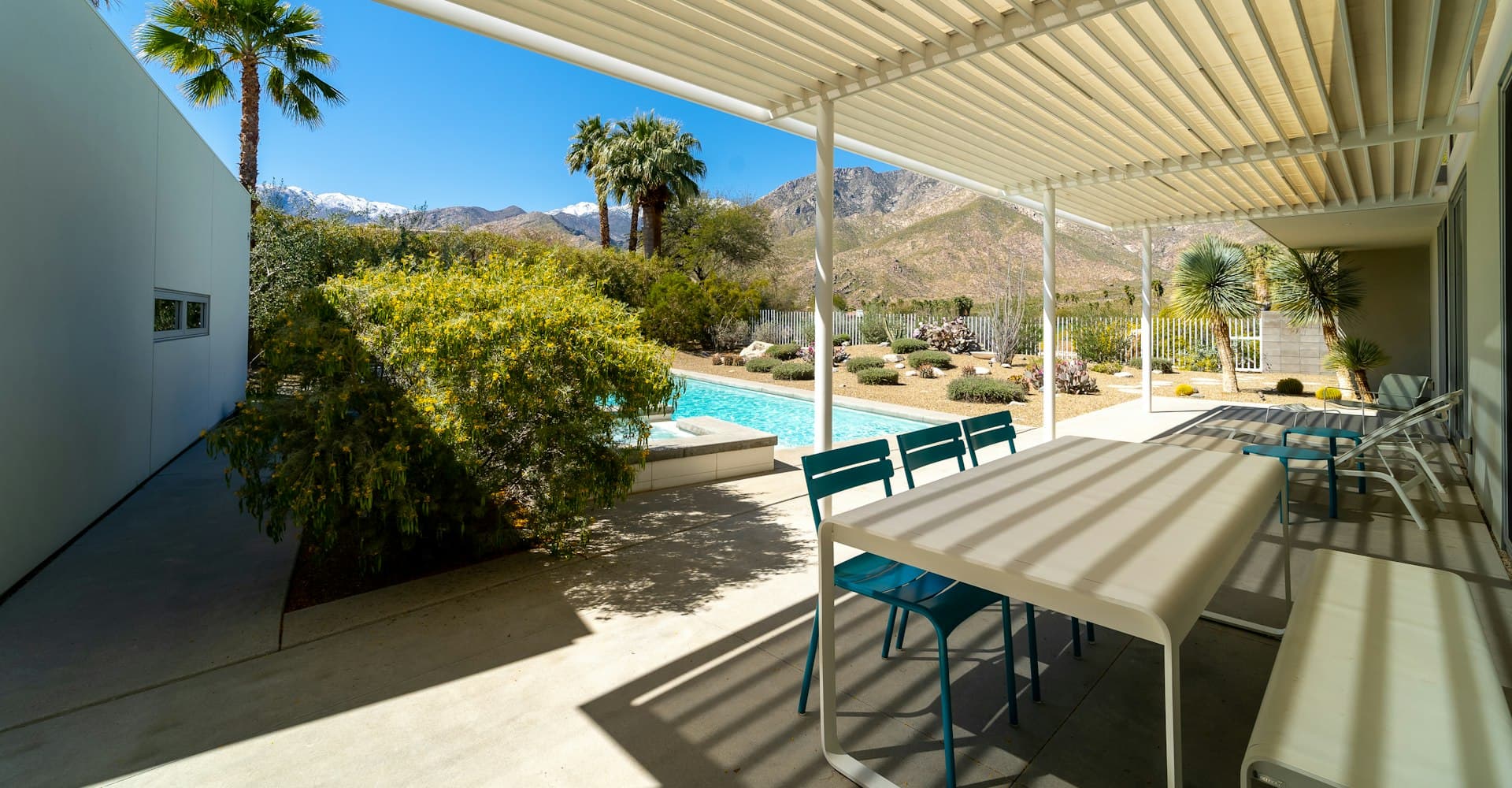
Specialized Structure
Custom Patio Covers & Insulated Roof Panels
Insulated structural roof panels do two jobs a standard screen roof can’t: they block radiant heat gain, and their rigid foam-core construction lets them span farther between supports.
An insulated structural panel (ISP) roof is built from a rigid foam core bonded between two aluminum skins, which gives the panel meaningfully more bending strength per inch of thickness than an unfilled panel of the same gauge. That translates directly into longer clear spans between beams — useful on patio covers where you want fewer support posts breaking up the space — and into a measurable reduction in radiant heat transfer compared to a standard non-insulated roof panel, which matters directly for how usable the space underneath stays through a Gulf Coast summer.
Because the panel itself is doing more structural work, the structural design for an ISP patio cover has to account for the actual span rating of the specific panel product being used — not a generic span table — along with the beam and post sizing needed to carry that panel’s dead load and the site’s wind uplift load together. We size and document both together as part of the permit package.
We install ISP patio covers for properties across Sarasota, Bradenton, Lakewood Ranch, Venice, North Port, Punta Gorda, Port Charlotte, Palmetto, Nokomis, Englewood, and surrounding areas of Sarasota, Manatee & Charlotte Counties, FL.
Panel Construction
Foam-Core / Dual Aluminum Skin
Rigid insulating core bonded between two aluminum skins for combined thermal and structural performance.
Structural Advantage
Extended Clear Span
Higher bending strength per inch of thickness allows fewer intermediate support posts on wide covers.
Thermal Advantage
Reduced Radiant Heat Transfer
Foam core meaningfully cuts heat transfer compared to a standard non-insulated roof panel of the same span.
Best Fit
True Outdoor-Room Conversions
Ideal where the goal is a usable, shaded living space rather than simple weather cover.
FAQ
Common Questions
The foam core meaningfully reduces radiant heat transfer compared to a standard non-insulated panel of the same span — that's the real, measurable benefit. The specific R-value depends on the exact panel product and core thickness we spec for your project, so we'll give you the actual number for the product in your quote rather than a generic figure that may not match what gets installed.
The panel product itself is built to carry foot traffic, but whether a specific installation can be walked on safely depends on the span and support spacing it was engineered for — that's a structural question tied to your specific design, not a blanket yes for any ISP roof. We size that into the engineering when a walkable roof is part of the scope.
The foam core does double duty. Beyond blocking radiant heat, it adds real bending strength per inch of panel thickness compared to an unfilled panel, which is what lets an ISP roof span farther between beams with fewer support posts. It also meaningfully dampens rain noise compared to a standard thin panel roof — a foam-core panel doesn't drum the way a hollow one does.
Yes — an ISP panel weighs more per square foot than a standard panel, and that added dead load, combined with the site's wind uplift load, both factor into how we size the beams, posts, and footers. We don't treat the panel choice as a simple swap; it changes the engineering for the structure underneath it.
ISP panel products typically come in a handful of factory finish colors rather than a custom paint match. We'll show you the actual color options for the specific panel product in your quote so you can match it to your trim and roofline.
The panels use a locking seam system between adjoining panels, which is designed to shed water and resist wind-driven rain intrusion better than a simple lapped panel connection. That seam detail is part of why ISP roofs hold up well in the kind of driving, sideways rain a Gulf Coast storm brings.
The permit path is the same — sealed structural drawings and either a site-specific calculation or documented Florida Product Approval numbers for the components used. The difference is that the ISP panel product's own approval documentation becomes part of that package alongside the framing calculations.
Yes, and it's a common addition. Electrical rough-in needs to be coordinated before the panels go up rather than added after, and depending on scope it may be its own permitted electrical trade separate from the structural permit. Tell us what you're planning underneath the cover before we finalize the panel layout so we can plan for it.